Behaviour
🌈 Positive Behaviour, Strong Relationships, Happy Learners 🌟
Together, we create a school where everyone feels safe, valued, respected and ready to learn.
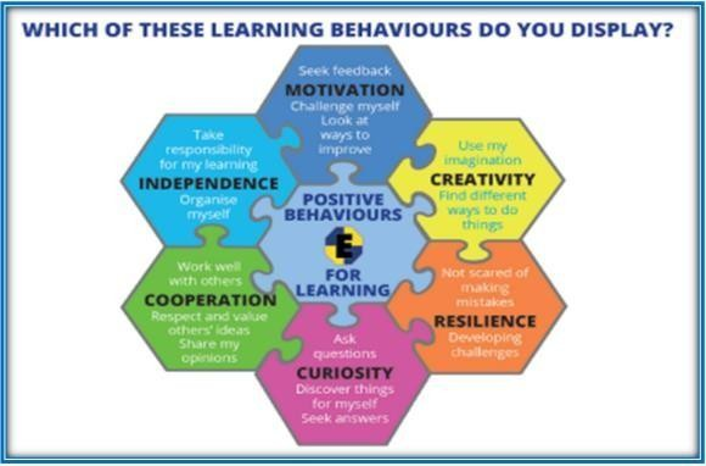
Learning Behaviours
Positive Reinforcement Systems

Our Class Dojo rewards are now focused around our new school values, alongside having a push for presentable uniform and learning behaviours.
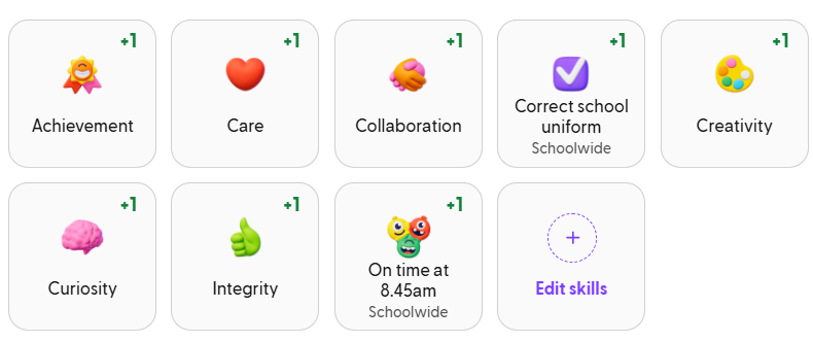
Positive reinforcements and rewards will be applied clearly and fairly to reinforce the routines, expectations and norms of the school’s behaviour culture.
Positive behaviour will be rewarded with:
- Verbal praise
- Stickers (inclusive of special Headteacher stickers)
- Class Dojo points
- Communicating praise to parents/carers via Class Dojo
 Positions of responsibility, such as prefect status or being entrusted with a particular decision or project
Whole-class or year group rewards, such as a popular activity
Certificates, prize ceremonies or special assemblies.
Certificates are awarded when the following points are reached:
100 Dojo points = Bronze certificate
200 Dojo points = Silver certificate 300
Dojo points= Gold certificate
Class Behaviour Charts
Each class is expected to have their Behaviour Chart and Class Charters and displayed in classrooms.
We use a consistent behaviour chart in every classroom across the school. This provides children with clear and familiar expectations, regardless of which classroom or member of staff they are working with.
Our behaviour chart is designed to recognise and celebrate positive choices, while also helping pupils understand when their behaviour needs to change.
Class Charters – Agreeing How We Learn Together
At the beginning of each school year, every class works together to create their own Class Charter. This gives pupils the opportunity to discuss and agree the rules, routines and expectations that will help everyone to feel safe, respected and ready to learn.
By involving children in these conversations, we encourage them to take ownership of their behaviour and understand how their choices can affect both themselves and others.